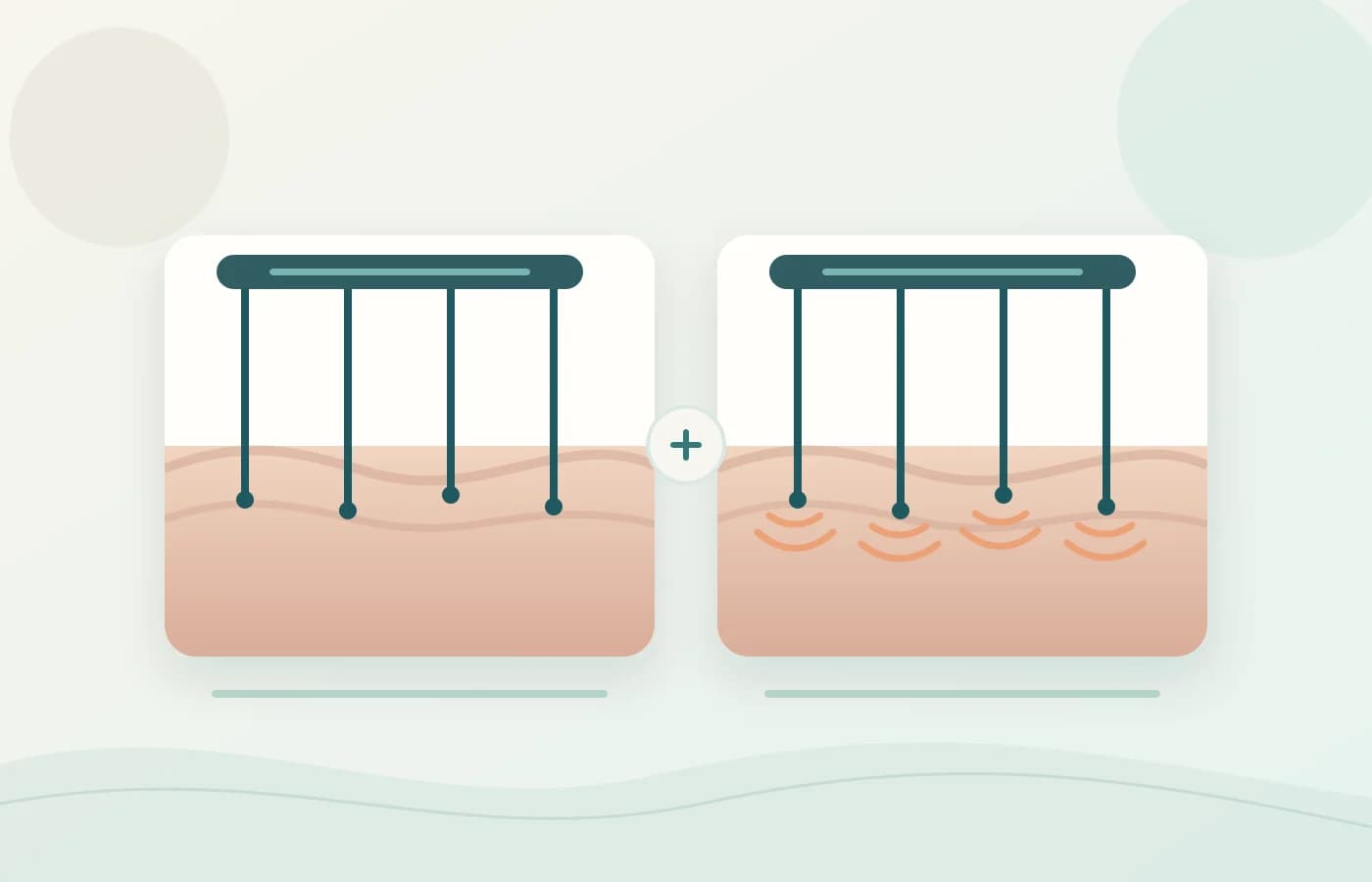
If a clinic offers both RF microneedling and microneedling, the name alone does not tell you which is appropriate for your skin. Both use needles, but RF adds controlled heating. That changes what the device does beneath the surface and makes the device, settings, operator, and complication plan especially important. This guide compares the choices without promising a result or assuming one option is safer for everyone.
The FDA's microneedling device guidance explains what has been legally authorized for particular uses and areas. In October 2025, the agency also issued a separate RF microneedling safety communication after reports of serious complications with certain aesthetic uses. Read both when evaluating an offer.
RF microneedling vs microneedling at a glance
| Question | Microneedling without RF | RF microneedling |
|---|---|---|
| What enters the skin? | Fine needles create controlled punctures. | Electrode needles enter the skin and deliver RF energy. |
| Is heat part of the mechanism? | No added RF heating. | Yes. RF energy produces local heating in and under the skin. |
| What must the consultation clarify? | Device, intended use, depth, infection controls, and skin suitability. | All of those, plus the RF device, energy plan, operator's RF training, and heat-related risks. |
| Can the choice be made from a menu name? | No. An assessment is needed. | No. The FDA says RF microneedling is a medical procedure and should not be used at home. |
This is a comparison of mechanisms and questions, not a ranking of results. The American Academy of Dermatology (AAD) describes RF microneedling as microneedling with heat delivered down the needles. Its patient guide notes that some studies suggest benefits for certain concerns, while also saying more research is needed across skin tones and larger groups. Your clinician should explain the evidence for your concern and the specific device proposed.
What can the devices treat?
The FDA says it has legally authorized specific microneedling devices for improving the appearance of facial acne scars, facial wrinkles, and abdominal scars in adults aged 22 or older. Authorization is tied to the individual device, intended use, and treatment area; it does not mean every device or every marketing claim has been reviewed. Ask for the device's patient labeling and its authorized indication. A clinic's generic statement that a device is “FDA approved” is not enough to establish that your proposed use is covered.
The AAD discusses microneedling for scars and explains that a dermatologist can assess whether it is suitable before choosing a pen, roller, or RF approach. For acne scars, skin texture, or wrinkles, ask what improvement the clinician considers realistic, how they will assess it, and what alternatives should be discussed. Our microneedling cost guide covers the variables that affect a quote; microneedling versus chemical peel compares a different treatment choice.
Ready to book?
Compare med spa providers near you by services, reviews, and enquiry options.
Microneedling in Miami →How do the risks differ?
Microneedling can cause short-term redness, dryness, tightness, discomfort, bruising, or bleeding. The FDA lists less common risks including pigment changes, cold-sore reactivation, and infection. The agency says a new needle cartridge should be used for each patient and session, even for a returning patient, because reuse is unsafe. Ask how the device is cleaned and how the clinic handles any unexpected reaction.
RF brings an additional energy source. In its October 2025 communication, the FDA reports burns, scarring, fat loss, disfigurement, and nerve damage with certain dermatologic or aesthetic uses. Some reported injuries required medical treatment or surgery. The FDA says its evaluation is ongoing. These reports do not provide a rate of complications or prove that every RF treatment will cause harm, but they are a reason to discuss the device and risk controls before consenting.
The FDA calls RF microneedling a medical procedure, recommends a licensed health care provider trained and experienced with RF devices, and says the devices should not be used at home. If you are concerned after treatment, seek care from a licensed health care provider. Get the clinic's after-hours contact and escalation plan before you leave. For severe or worsening symptoms, seek prompt medical attention rather than waiting for a routine follow-up.
Does skin tone change the decision?
Skin tone is one factor in a personal assessment, not a shortcut to a yes or no answer. The AAD discusses RF microneedling for people with different skin tones, but cautions that studies supporting some comparisons involved small numbers and need broader research. The FDA notes that microneedling can cause darkening or lightening of the skin, and that some authorized devices were not studied in people with darker skin types. Ask whether the proposed device's evidence includes your skin type, what pigment risks apply, and how the clinician would respond if discoloration occurs.
Medical history matters too. The FDA's patient checklist flags active infection or rash, cold sores, immune suppression, bleeding disorders, certain medications, keloid history, and other conditions for discussion. Do not stop prescribed medicines on the basis of a blog post. A clinician should review your history and explain whether either procedure should be deferred or avoided.
What about downtime, sessions, and total cost?
There is no responsible single downtime, session count, or price to attach to either label. It depends on the device, settings, area, treatment goal, skin response, and follow-up plan. The FDA says more than one microneedling procedure may be needed for a desired aesthetic improvement; that is not a guarantee that a series will work. Ask for a written estimate covering the consultation, each proposed session, follow-ups, and any additional products or care. Ask which costs are optional and what happens if the plan changes.
For local comparisons, browse microneedling providers in Miami, explore Miami med spas, or compare options in other cities. You can also start a provider request and browse the full treatment directory. A listing helps you find options; it does not certify the operator, device, or clinical suitability.
Questions to ask the provider
- What exact device and model would you use, and is the proposed treatment area and purpose within its FDA-authorized use?
- Who will evaluate and perform the procedure? What is their license, training, and experience with this device and my skin type?
- Why do you recommend needling alone or RF for my concern? What alternatives, including no treatment, should I consider?
- What settings or treatment depth are planned, and how will you decide whether to adjust or stop?
- Will you use a new single-use needle cartridge for my session, and how is reusable equipment cleaned?
- What side effects and serious complications should I know about, including pigment changes, infection, burns, scarring, and fat loss where relevant?
- What aftercare will I receive in writing, when is follow-up, and whom do I contact after hours?
- What is the full quoted cost for the proposed plan, and what could change it?
If a clinic cannot identify the device, operator, and complication pathway, pause and seek a more complete consultation. Our med spa consultation guide offers a broader checklist.
Safety and medical limitations
This article is general education, not medical advice or a diagnosis. A licensed clinician who examines you and reviews your health history must decide whether a procedure is appropriate. FDA authorization is device and use specific; it does not guarantee an individual outcome or erase procedure risks. Avoid at-home RF microneedling. Report unexpected problems to a clinician and, where appropriate, follow the FDA's reporting guidance.
FAQs
Is RF microneedling the same as ordinary microneedling?
No. Both use needles, but RF microneedling also delivers radiofrequency energy that heats tissue. Ask which device is proposed and why that added step is appropriate for you.
Is RF microneedling automatically better for acne scars?
No. The AAD discusses RF as one option, but the choice depends on scar type, skin, medical history, device, and clinician assessment. The evidence does not support promising a better result for every patient.
Has the FDA banned RF microneedling?
The FDA's safety communication warns about serious complications reported with certain uses; it does not state a general ban. It recommends discussing risks and seeking an experienced licensed provider.
Can I do either treatment at home?
The FDA specifically says RF microneedling devices should not be used at home. Professional microneedling devices can penetrate living skin and carry risks including infection. Talk with a qualified clinician before considering a procedure.